After the pleasurable job of carefully choosing the miniature you want to paint, just at the moment when you’re sited facing your brushes, it’s essential to take into account a few considerations reflected in the following tips.
Tips for painting a miniature
Always keep your paintings in a cool and dry place.
Beware the heat, direct sunlight, and high temperatures, especially if you’re painting next to a window during summertime.
It is advisable to regularly shake the cans so that the pigment doesn’t get stuck at the bottom of the can.
Above all, you should always shake them before using them.
There is a wide range of steel balls to place inside the cans to ease the stirring.
Once your painting can is finished, you can reuse them in other cans.
You can also get an electric stirrer similar to the ones used in cosmetics.
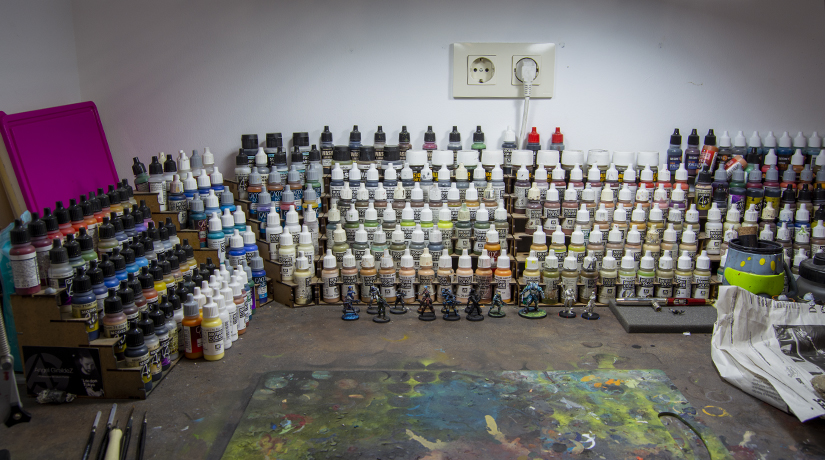
It is very useful to order the paintings in the most comfortable way for you. For example, by color range or by use, or even by specific recipes (skin, leather, etc.).
Tips for brushesto paint a miniature
The main working tool. It is important to always keep it clean.
You should always clean it with clear water at the end of your painting session, and dry it with absorbent paper. That’ll keep the tip of the brush at the place.
There are products such as brush repairers that will help you in this step. They might extend the useful life of the brush for a while, but keep in mind that this trick will work depending on its quality and how good its maintenance is.
Let’s get started a paint miniatures…
After a clean coat of primer (remember that several thin layers are better than a thick one, and this tip is valid for brush painting as well) consider the following.
Don’t directly apply the paint straight from the can!
Always put it on the palette and dilute it with water or a little thinner.
The amount of liquid will depend on the color and the amount of pigment, not all colors work in the same way. Ideally, find a texture that allows the paint to move freely without draining: the so-called "milk" texture.
When wetting the brush, you shouldn’t soak the bristles in full, so that the paint doesn’t reach the cap and ends up drying, opening the hair with the excess of paint. Therefore, it’s better if you dip it only until the middle of the hair.
We insist on following these recommendations above.
Remember: when applying the paint with the brush, it’s better to do it in several thin layers than a thick one.
You minimize the risk of leaving big daubs on the surface. This way you can see the progression and you can always apply more color if you consider it necessary.
These tips will allow you to start. Remember to train your patience and pulse! This is fun; take it easy and go for it!