
For this reason, the Funduq Sultanate and the Silk tycoons always ensure that the Qapu Khalqi fleet is among the largest and most powerful in the entire Sphere. The Qapu Khalqi navy has succeeded in spreading its ships in an intelligent network that covers all the major routes, as well as the most frequented areas of the secondary routes, in a logistical effort unparalleled in the commercial history of humanity.
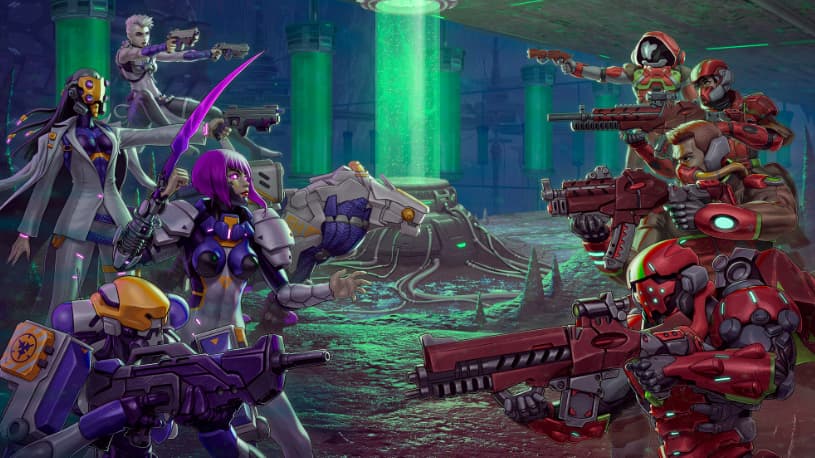
Despite all this, the system isn’t flawless, and it still has its holes. As evidenced during the Silk Revolts, high-intensity war scenarios and massive attacks on multiple fronts may strain the resources of the Qapu Khalqi too severely, which in turn may weaken its reaction capabilities and result in some regions being left unprotected and at the mercy of enemy forces. To avoid such situations, because the Qapu Khalqi learned its lesson during the Silk Revolts, it created the Melek (Turkish for “Angel”) Reaction Groups.
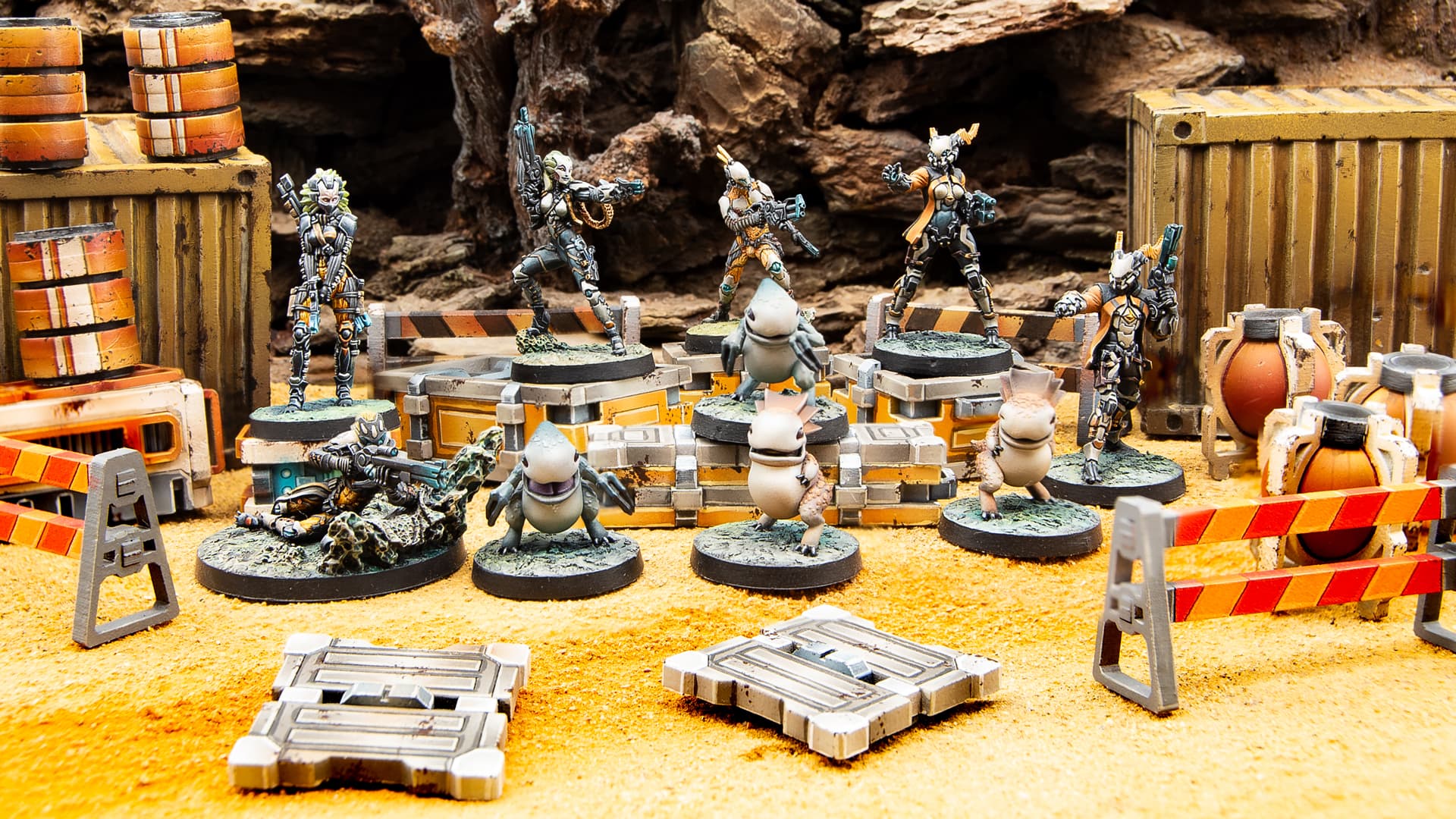
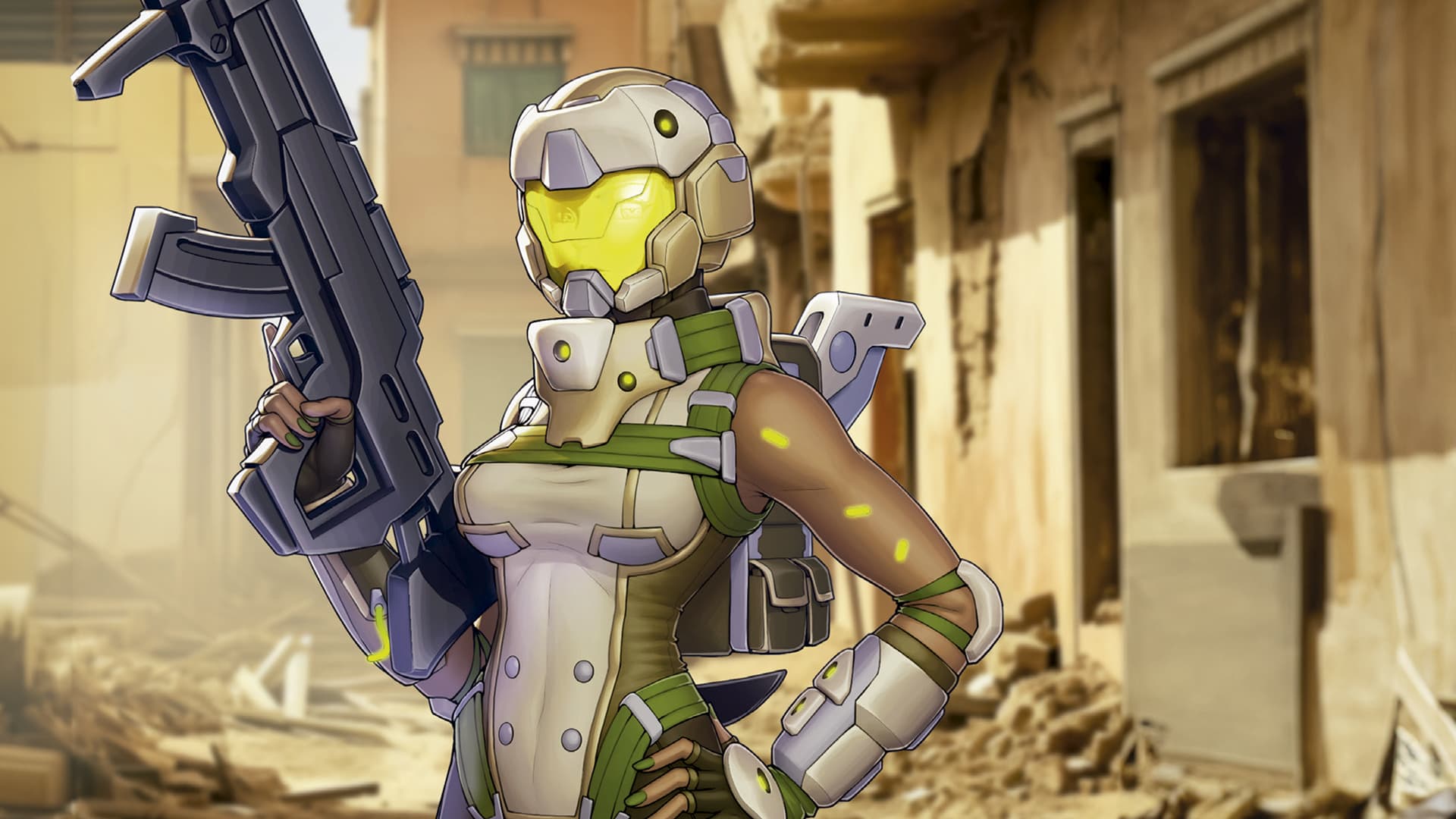
These reaction groups are made up of a small-sized team of veteran troops from different Qapu Khalqi units that are used to working together. Each team is usually provided with a fast pursuit unit (FPU), a light gunship with very powerful thrusters. The Melek are true to their code name, for they are the guardian angels who watch over Haqqislamite citizens and interests in the most remote corners of the Sphere, and this evidences that to a nation that follows the Search for Knowledge, all the people who walk this path are of the utmost importance.
KORSAN, CORSARIOS DE LA PUERTA
There is a fine line between piracy and privateering, but it exists and it’s an important one. There is also a fine line between Haqqislamite corsairs and the privateers from any other nation in the Sphere, but that line exists too, and it’s an even more significant distinction.
It was Byron who, in one of his poems, described a corsair as a man whose name would be “linked with one virtue and a thousand crimes,” but in the case of the Korsanlar, the corsairs serving at the Gate, they possess more virtues and commit fewer crimes, yet are still the most dangerous characters to have ever sailed through deep space. This is no joke, nor the invention of some PR team: Haqqislamite corsairs capture more prey than anyone else, but always by the rules of privateering, because the consequences of not complying with them would be swift and deadly.

No Korsan ship would launch a violent raid or target a ship that hasn’t been cleared as lawful prey. Other corsairs and pirates may be scary because they’re more vicious and bloodthirsty, but the Korsanlar are as professional and effective as they are deadly. It’s only natural, given their extensive experience, because if they can’t find a job aboard a privateer ship they can apply for a position with the boarding detachment of any Qapu Khalqi vessel, where they will work side by side with the troops of the Gate. Many of them are ex-soldiers who already know the ropes and this way they can earn a regular income and keep their skills sharp until they find a more lucrative job as a privateer.

BURKUT, REGIMIENTO DE INGENIERÍA AERONAVAL
In the early days of Haqqislam, during the mass migration to Bourak, NASA personnel held a crucial role. Forsaken by their increasingly isolationist government, this group of experts scattered in orbital bases all over the solar system found refuge in the Haqqislamite movement, which regarded them with respect as true Seekers of Knowledge. NASA stations became stopovers for the motley array of ships that the Haqqislamite colonists had been able to procure.
In them, the skills of that space agency’s engineers proved essential to helping many colonists continue their journey, and in accordance with the typical Haqqislamite generosity and hospitality, they were all invited to join Haqqislam. They all welcomed the opportunity to pursue their passion, so they spread out to the new stations built in the Fareedat System, and to the rest of the Human Sphere aboard numerous Haqqislamite vessels.

In those early days, these engineers built an informal brotherhood by recruiting all those like minded individuals who shared NASA’s vision of exploration while they kept all the systems of spacecraft and orbitals up and running. More and more committed to the Haqqislamite cause and its culture, they named their society after the eagle god of Turkic mythology, Burkut, in memory of Apollo 11, since its emblem was also an eagle. They also joined the military ships of the fledgling Qapu Khalqi at this time, where they worked only as engineers and consultants, without joining any combat units.

You can read more about the Melek Reaction Group and its troops in the Endsong book.